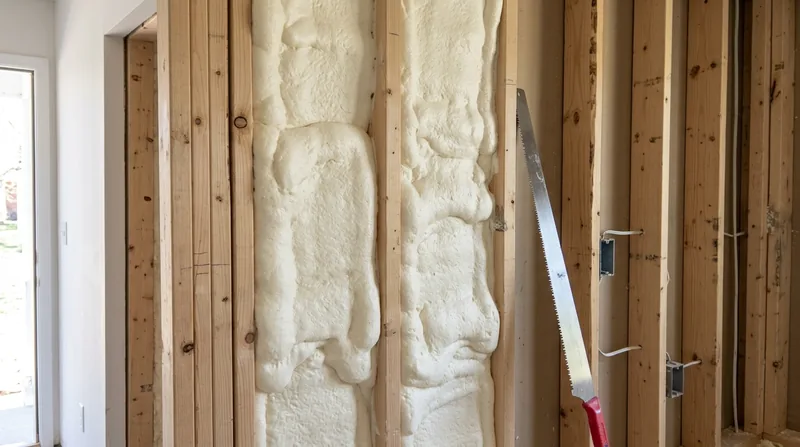




Open Cell Spray Foam Insulation in St. Louis is a half-pound foam that air-seals attics and walls at a cost-friendly price per board foot, with the bonus of sound dampening between rooms and floors. St. Louis sits on a mixed-humid climate that flips vapor drive with the seasons: cold winters push moisture outward through walls and attics, while humid summers drive it inward. The city's building stock ranges from 1870s brick townhouses and Second Empire mansards in the central neighborhoods to 1920s-40s bungalows with knee walls and finished half-story attics prone to ice dams in the south city, to 1940s-60s frame and brick ranches in the inner-ring suburbs, to 1980s-2020s two-stories with walkout basements and vaulted great rooms in Chesterfield, Ballwin, Wildwood, and the newer west-county corridors. Every one of these homes leaks air at the rim joist, the band joist, the attic boundary, and the wall cavities. Open cell foam seals those leaks without the premium price of closed cell, making it the right choice for attics and interior walls where moisture control is not the limiting factor. We spell out where open cell belongs, and where a basement or a cold exterior wall calls for closed cell instead.
Why Open Cell Spray Foam Matters in St. Louis Homes and Attics
St. Louis attics swing between 130 to 150 degrees Fahrenheit in July and drop into the teens in January. That temperature and humidity swing is the core problem: air leaks let conditioned air escape in winter and humid air infiltrate in summer, forcing your HVAC system to work harder and driving your utility bills up. The flat or low-slope roofs behind parapets on the brick townhouses and flats of Soulard, Lafayette Square, and Tower Grove are especially vulnerable to ice dams in winter when warm attic air melts snow on the roof, and the water backs up behind gutters and into the walls. The knee walls and finished half-attics of the south city bungalows create a maze of framing cavities that are nearly impossible to seal with fiberglass batts. Open cell foam fills every cavity, seals every air leak, and does the job in a single pass.
- Fills irregular cavities and framing gaps that fiberglass batts leave open, stopping air leakage at the source.
- Dampens sound between finished attic rooms and the floors below, a benefit fiberglass cannot match.
- Costs 30 to 40 percent less per board foot than closed cell foam, making it the budget-friendly choice for attics where moisture control is not the driver.
- Allows vapor to pass through the foam, so if moisture does enter the assembly, it can dry to the interior in a mixed-humid climate.
- Meets code thermal barrier and ignition barrier requirements when installed to the specified thickness and density.
Choosing the right foam type is the first step to a durable, efficient attic or wall assembly.
Key info: St. Louis building code requires a thermal barrier (15-minute fire rating) between the foam and the occupied space in attics and walls. Open cell foam meets this requirement when sprayed to the correct thickness. The building official at your address sets the requirement, not the foam type. Always confirm with your local permit office before any work begins.
For more on how we approach air sealing in attics, see our attic spray foam insulation service page.
How We Install Open Cell Spray Foam in St. Louis Homes: The Process
Open cell foam is applied by spraying a two-part chemical mixture that expands in place. The process starts with a site inspection to identify all the cavities and air leaks that need sealing, then we set up mechanical ventilation to manage fumes during application and establish a clear re-entry window. The foam is sprayed in multiple thin passes to build up to the target thickness and density. Once cured, we trim excess foam and install the required thermal barrier (typically a fire-rated paint or membrane) to meet code. The whole process from setup to cleanup takes one to two days for a typical attic, and the home is ready for re-entry within 24 to 48 hours.
- We inspect the attic or wall cavity and identify all air leaks, gaps, and framing voids that need sealing.
- We set up mechanical ventilation and establish a safe working environment with controlled temperature and humidity.
- We spray the foam in controlled thin passes, allowing each layer to rise and cure before the next pass begins.
- We trim excess foam flush with the framing and apply the thermal barrier coat to meet local code requirements.
- We provide a written estimate with the R-value and foam thickness specified for your job, so you know exactly what you are getting.
A clear scope and a transparent process are the foundation of a job that performs and lasts.
Local example: A 1920s brick bungalow in Lindenwood Park with a finished half-attic and knee walls typically has 12 to 15 separate framing cavities created by the collar ties, rafters, and collar ties that frame the sloped ceiling. Fiberglass batts leave gaps at every framing member. Open cell foam reaches into every pocket and seals the whole assembly in one spray, stopping the ice dam leaks that plague these homes in January.
To learn more about the air sealing work that accompanies every foam job, visit our air sealing service page.
| Approach | Description | Best for |
|---|---|---|
| Open Cell Spray Foam | Half-pound foam sprayed in multiple thin passes to fill cavities and seal air leaks. Expands after spraying and cures in 24 to 48 hours. Allows vapor to pass through, suitable for mixed-humid climates. | Attics, interior walls, knee walls, rim joists, and sound dampening between floors in St. Louis homes. |
| Closed Cell Spray Foam | Two-pound foam with higher density and lower permeability. Provides vapor barrier properties and higher R-value per inch. Cures faster and is more moisture-resistant than open cell. | Crawl spaces, band and rim joists over basements, metal buildings, cold exterior walls, and assemblies where moisture control is critical. |
| Blown-In Fiberglass or Cellulose Top-Up | Loose-fill insulation blown into attic cavities over existing insulation. Lower cost per R-value than spray foam. Does not seal air leaks, only adds thermal resistance. | Adding R-value to an attic with sound existing insulation and no significant air leaks. Not suitable for walls or cavities with framing gaps. |
| Injection Foam Into Walls | Open or closed cell foam injected into wall cavities through small holes without removing drywall. Seals cavities from the inside and adds both thermal and air barrier properties. | Retrofitting empty or poorly insulated wall cavities in pre-1980 brick and frame homes without interior demolition. |
Open Cell Spray Foam Insulation Cost in St. Louis: What to Expect
Open cell spray foam typically costs starting at $0.55 per board foot, though the final price depends on several factors specific to your home and job site. A typical attic in a St. Louis home might run 800 to 1,500 board feet depending on the footprint and the target R-value. Access to the attic (pull-down stairs versus a scuttle hole), the complexity of the framing (knee walls and collar ties add time and material), and whether we need to remove old insulation first all affect the final number. A rim joist and band joist job on a 2,000-square-foot house might run 200 to 400 board feet. The best way to know your actual cost is to get a free written estimate with R-value and thickness specs from two or three contractors, so you can compare apples to apples.
We recommend getting multiple estimates because spray foam prices vary widely depending on the contractor's equipment, crew experience, and overhead. A low estimate with no R-value and no thickness specification is a red flag. A price far below market with a promise of immediate re-entry is a sign the contractor is cutting corners on ventilation and cure time. Our estimates always include the R-value, the foam thickness, the board footage, and a realistic timeline so you know exactly what you are paying for and when the job will be done.
For a detailed breakdown of pricing for all our services, visit our full pricing page.
What to Look for When Hiring a Spray Foam Insulation Contractor Near St. Louis
Choosing the right spray foam contractor is as important as choosing the right foam type. The spray foam industry has both local independent shops and national franchises, and also rig-and-run crews that spray a job in an afternoon and are unreachable when the smell does not go away or the foam does not perform. The local independent contractor should be fully insured with a local address and local plates, able to answer technical questions about foam type and installation technique, and willing to explain why a particular foam is the right choice for your home. Always ask for references and call them. Ask about mechanical ventilation during cure, the re-entry window, and how the contractor will verify the foam thickness and density after application.
- Verify that the contractor carries full insurance and can provide a current certificate of insurance before any work begins.
- Get written estimates from at least two contractors and compare the R-value, thickness, and board footage so you are buying the same product.
- Ask about the contractor's experience with St. Louis homes, especially older brick and frame houses with complex framing and moisture history.
- Confirm that the contractor understands local building code thermal barrier and ignition barrier requirements for your address and will pull the permit.
- Ask how the contractor manages fumes and re-entry, and what mechanical ventilation will be used during cure.
- Check references and ask past customers about the contractor's responsiveness, cleanup, and whether any odor or performance issues came up after the job.
A contractor who takes time to understand your home, explains the process clearly, and stands behind the work is worth the phone call. Call us at (314) 912-1801 or request a free estimate online to discuss your project and get a clear picture of cost and timeline.
Open Cell Spray Foam Insulation in St. Louis: Pricing Guide
| Service | Price | Details |
|---|---|---|
| Open Cell Spray Foam Attic | Starting at $0.55/board ft | Includes foam, labor, mechanical ventilation, thermal barrier, and trim. Attic size and framing complexity drive final cost. |
| Wall Cavity Injection Foam | Starting at $0.60/board ft | Includes drilling, injection, foam, and patching. Older brick and frame homes with empty cavities are ideal candidates. |
| Rim Joist and Band Joist Sealing | Starting at $0.65/board ft | Includes foam, mechanical ventilation, and thermal barrier. Typical job runs 150 to 300 board feet depending on basement perimeter. |
| Insulation Removal and Replacement | On estimate | Cost depends on type and volume of existing insulation, disposal, and access. Always quoted separately to set clear expectations. |
| Travel and Mobilization | Included | No separate charge for service calls within St. Louis and surrounding counties. Equipment setup and cleanup are part of the job. |
| Free Written Estimate | No cost | Response within 24 hours at (314) 912-1801. Includes R-value, thickness, board footage, and timeline with no obligation to book. |
Indicative pricing, the exact cost depends on square footage, finish, and site access. Free personalized estimate within 24h at (314) 912-1801.


